 Well Point System
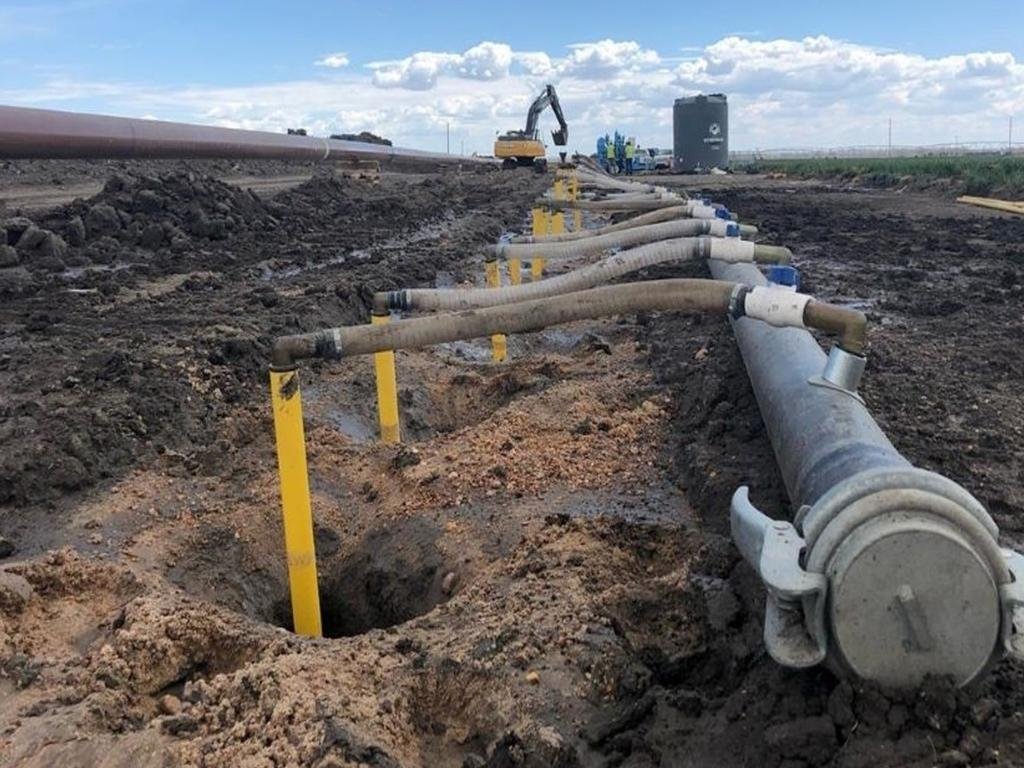
The well point system is one of the most versatile pre-drainage methods, which can pump a few gallons per minute in fine sandy silts or many thousands of gallons per minute in coarse sands and gravels.
A well point system consists of a number of well points spaced along a trench or around an excavation site, all connected to a common header, which is attached to one or more well point pumps.
Well Point systems are most suitable in shallow aquifers where the water level needs to be lowered no more than 15 or 20 feet. Due to the vacuum limitation of the pump, excavations that are deeper will require multiple stages of well point systems.
When designing a well point system, it is necessary to give first consideration to the physical conditions of the site to be dewatered.
Steps involved in Well Point System:
-
Pre-Drilling or Auguring Works
As a means of ensuring the integrity of the wellpoint installation, Pre-drilling shall be executed by the use of a self-propelled drilling rig with a 150 mm auger. -
Well Point Installation
High pressure water shall be injected into the ground through the jetting lance, cleaning the pre-drilled bore into which the wellpoint shall be installed.
Once the wellpoint is installed, the lance is held in this position until the water being ejected out through the top of the borehole runs clean. -
Header Pipe Network
Upon completion of the installation of the predetermined number of well-points, the wellpoints shall be connected to the header pipe network by means of swing pipes, which in turn is connected to the dewatering pump. -
Pumping
The collected water produced by the groundwater control system shall be discharged into the settlement tank prior to discharging to the available drainage.